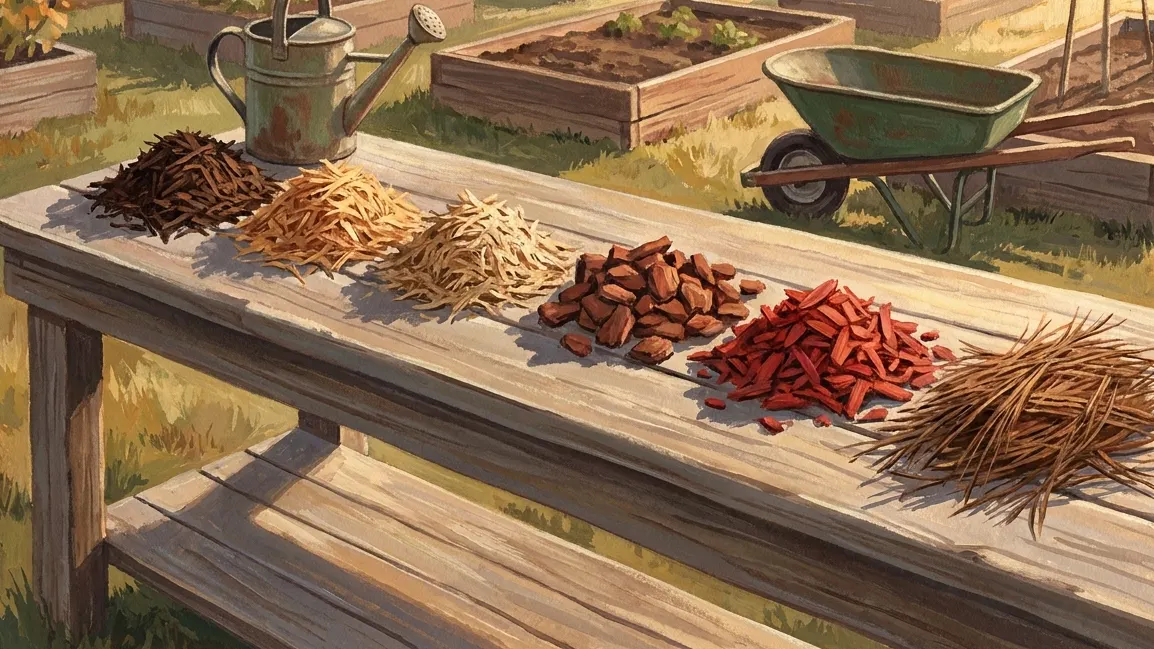
Mulch types at a glance
| Type | Look | Typical depth | Good for | Keep in mind |
|---|---|---|---|---|
| Shredded hardwood | Dark brown, stringy, knits together | 2–3 in | Shrub and flower beds | Darkens then fades to gray in sun |
| Shredded cedar | Golden to reddish, aromatic | 2–3 in | Beds, paths, around foundations | Breaks down slowly |
| Cypress | Light tan, fibrous | 2–3 in | Beds | Ask where it’s sourced |
| Pine bark nuggets | Chunky, reddish-brown | 3–4 in (large) | Beds, around shrubs and trees | Can float and wash away on slopes |
| Pine bark fines / mini nuggets | Small, even, dark | 2–3 in | Small beds, perennials, containers | Breaks down faster than nuggets |
| Dyed (colored) mulch | Black, brown or red | 2–3 in | Strong, even color | Color fades; ask what wood it’s from |
| Wood chips | Mixed sizes, pale when fresh | 3–4 in | Paths, tree rings, play areas | Varies load to load |
| Rubber mulch | Nuggets or shreds, many colors | 1.5–2 in in beds; 6 in under play equipment | Playgrounds, low-plant areas | Doesn’t feed soil; hard to remove |
| Pine straw | Long brown needles | 2–3 in settled | Slopes, acid-loving shrubs, Southeast | Sold by the bale, not the yard |
Shredded hardwood
The everyday landscape mulch in much of the US. It’s made from shredded bark and wood from hardwood trees, and the strands knit together into a mat that stays put on gentle slopes. It breaks down steadily, adding organic matter to the soil, so most beds need a top-up each year or two. Use the mulch calculator at 2–3 inches.
Cedar mulch
Shredded cedar has a light color when fresh and a distinctive scent. It breaks down more slowly than most hardwood mulch, so it lasts longer between top-ups. It’s popular along paths and around foundations. Like any wood mulch, it eventually weathers to a silver-gray.
Cypress mulch
A light, fibrous mulch that’s common in parts of the South. Some gardeners avoid it over concerns about how cypress is harvested, so ask your supplier where theirs comes from. It spreads easily and holds together well.
Pine bark nuggets and pine bark fines
Pine bark comes in sizes, from large nuggets the size of a fist down to fines that look almost like soil. Large nuggets last a long time and let water through easily, but they’re light and can float off in heavy rain, so they’re best on flat ground. Lay them 3–4 inches deep because the gaps between them let light through. Mini nuggets and fines give a neater, finer look and suit small beds and perennials at 2–3 inches. The bark mulch calculator is set up for these.
Dyed mulch
Wood mulch colored black, brown or red. The color looks sharp for a season and then fades, which is why many people top it up each spring. Dyed mulch is sometimes made from recycled wood, such as old pallets, so ask the supplier what wood is in it and what the colorant is.
Wood chips
Chipped branches and trunks, often from tree work. They’re coarser and more mixed than shredded mulch, with bark, wood and sometimes leaves. Chips are excellent for paths, around trees and in natural areas. Fresh chips use up a little nitrogen right at the surface while they break down, but that doesn’t affect plant roots below. Just don’t mix fresh chips into the soil. See the wood chip calculator.
Rubber mulch
Made from recycled tires and sold as nuggets or shreds. It doesn’t decompose, doesn’t blow away easily and holds its color, which makes it popular under play equipment. On the other hand, it adds nothing to the soil, can get hot in full sun, and is hard to remove once it’s mixed into a bed. In beds it goes on thinner than wood mulch. Use the rubber mulch calculator.
Pine straw
Fallen pine needles, raked and baled. It’s light, quick to spread, and the needles interlock, so it stays on slopes better than most bark. It’s a staple in the Southeast and looks natural under pines and around azaleas. It’s sold by the bale and breaks down within a year or so. Use the pine straw calculator to count bales.
Playground surfacing
Playgrounds need much deeper loose fill than garden beds: usually 9 inches or more of wood chips or engineered wood fiber, or 6 inches of shredded rubber. That’s a safety surface, not decoration. The playground mulch calculator explains the depths.
How to choose
- Start with the job. Beds want a mulch that feeds the soil. Paths want something chunky that holds up to feet. Playgrounds need a safety surface. Slopes need something that interlocks.
- Match the look. Dark mulch makes green foliage pop; natural cedar and pine straw look softer.
- Consider upkeep. Fine mulch looks neat but needs topping up more often. Chunky mulch lasts longer.
- Check what’s local. What’s made nearby is usually easier to get in bulk.
Whatever you choose, keep mulch a few inches away from tree trunks and plant stems, and don't pile it deeper than about 4 inches in beds. The mulch depth guide explains why.
Questions people ask
- What is the best type of mulch?
- For most shrub and flower beds, a shredded hardwood or pine bark mulch at 2 to 3 inches does the job well and feeds the soil as it breaks down. Pine straw suits slopes and acid-loving shrubs, wood chips suit paths and tree rings, and rubber or engineered wood fiber is made for playgrounds.
- Which mulch lasts the longest?
- Rubber mulch doesn't break down. Among wood mulches, large chunky pieces such as pine bark nuggets and coarse wood chips generally last longer than finely shredded or double-ground mulch.
- Is dyed mulch safe?
- Dyed mulch is wood colored with a colorant. Ask the supplier what wood it's made from and what the colorant is. If you can't find out where the wood came from, many gardeners prefer undyed mulch around vegetables.
- Does the type of mulch change how much I need?
- The volume formula is the same for every type. What changes is the depth you'd use: coarse nuggets and chips are often laid 3 to 4 inches deep, fine mulch 2 to 3 inches and rubber mulch about 1.5 to 2 inches in beds.
- Should I put mulch in vegetable gardens?
- Yes, many gardeners do. Straw, shredded leaves and untreated wood chips on paths are common choices. Avoid mulch made from wood of unknown origin around food plants.